
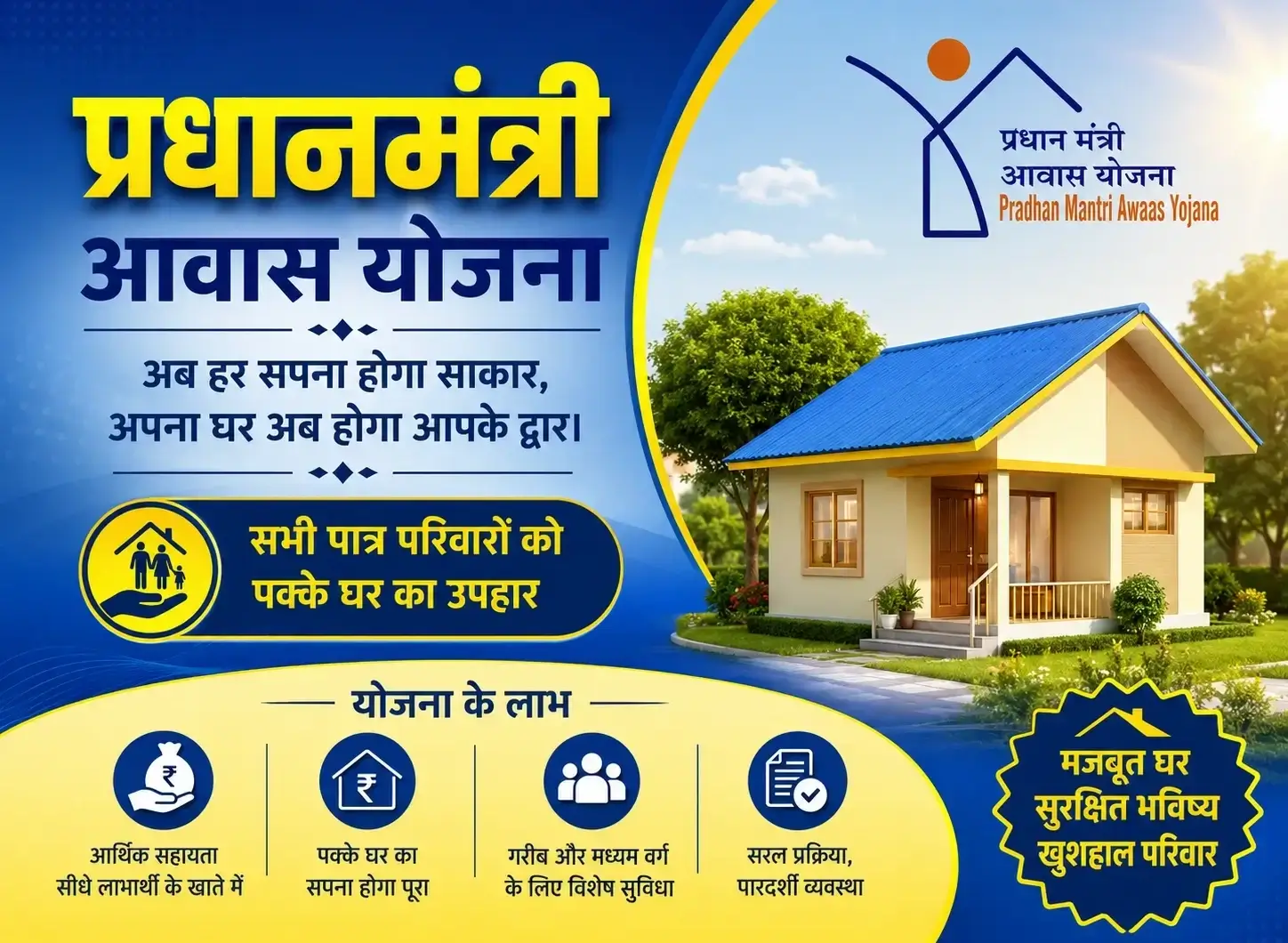
आज के समय में अपना खुद का पक्का घर होना लगभग हर परिवार का सपना होता है। लेकिन बढ़ती हुई property prices के कारण कई परिवारों के लिए यह सपना पूरा करना आसान नहीं होता। इसी समस्या को ध्यान में रखते हुए भारत सरकार ने Pradhan Mantri Awas Yojana (PMAY) की शुरुआत की। इस योजना का उद्देश्य आर्थिक रूप से कमजोर एवं मध्यम वर्ग के लोगों को अपना घर बनाने या खरीदने में आर्थिक सहायता प्रदान करना है।
यह योजना दो प्रमुख भागों में संचालित की जाती है:
- PMAY-Urban (PMAY-U): शहरी क्षेत्रों के लिए।
- PMAY-Gramin (PMAY-G): ग्रामीण क्षेत्रों के लिए।
PMAY के माध्यम से सरकार पात्र परिवारों को घर निर्माण, घर खरीदने तथा Home Loan पर Interest Subsidy जैसी सुविधाएं उपलब्ध कराती है। यदि आप भी अपना पहला घर खरीदने या बनवाने की योजना बना रहे हैं, तो यह योजना आपके लिए काफी लाभदायक हो सकती है।
About Pradhan Mantri Awas Yojana (योजना के बारे में)
Pradhan Mantri Awas Yojana (PMAY) भारत सरकार की एक प्रमुख Housing Scheme है, जिसकी शुरुआत वर्ष 2015 में की गई थी। इस योजना का मुख्य लक्ष्य प्रत्येक पात्र भारतीय परिवार को पक्का और सुरक्षित आवास उपलब्ध कराना है।
PMAY के अंतर्गत सरकार विभिन्न Income Categories के लोगों को आर्थिक सहायता प्रदान करती है। इसके अलावा Credit Linked Subsidy Scheme (CLSS) के माध्यम से Home Loan लेने वाले पात्र लाभार्थियों को Interest Subsidy भी दी जाती है, जिससे Loan की कुल लागत कम हो जाती है।
ग्रामीण क्षेत्रों में PMAY-G के अंतर्गत पात्र परिवारों को पक्का घर बनाने के लिए वित्तीय सहायता प्रदान की जाती है, जबकि शहरी क्षेत्रों में PMAY-U के माध्यम से घर खरीदने, निर्माण कराने या पुराने घर का विस्तार करने के लिए सहायता उपलब्ध कराई जाती है।
Objectives of Pradhan Mantri Awas Yojana (योजना का उद्देश्य)
सरकार द्वारा इस योजना को शुरू करने के पीछे कई महत्वपूर्ण उद्देश्य हैं:
- प्रत्येक पात्र परिवार को पक्का आवास उपलब्ध कराना।
- आर्थिक रूप से कमजोर वर्ग (EWS) को Housing Support देना।
- Low Income Group (LIG) एवं Middle Income Group (MIG) को Home Loan पर Interest Subsidy प्रदान करना।
- ग्रामीण क्षेत्रों में कच्चे मकानों को पक्के मकानों में बदलना।
- महिलाओं के नाम या संयुक्त स्वामित्व को बढ़ावा देना।
- बेहतर जीवन स्तर और सुरक्षित आवास उपलब्ध कराना।
- “Housing for All” के लक्ष्य को पूरा करना।
- गरीब एवं मध्यम वर्ग के लोगों पर आर्थिक बोझ कम करना।
प्रधानमंत्री आवास योजना 2026: मुख्य बातें (Key Highlights)
| विवरण | जानकारी |
| योजना का नाम | Pradhan Mantri Awas Yojana (PMAY) |
| योजना का प्रकार | Central Government Scheme |
| शुरुआत | वर्ष 2015 |
| संबंधित मंत्रालय | Ministry of Housing and Urban Affairs एवं Ministry of Rural Development |
| लाभार्थी | EWS, LIG, MIG एवं पात्र ग्रामीण परिवार |
| योजना के भाग | PMAY-Urban (PMAY-U) एवं PMAY-Gramin (PMAY-G) |
| मुख्य लाभ | पक्का घर एवं Home Loan Interest Subsidy |
| आवेदन प्रक्रिया | Online and Offline |
| आधिकारिक उद्देश्य | Housing for All |
| आधिकारिक वेबसाइट | PMAY-U and PMAY-G Official Portal |
Pradhan Mantri Awas Yojana Key Features
1. Housing for All
इस योजना का सबसे बड़ा उद्देश्य प्रत्येक पात्र भारतीय परिवार को अपना पक्का घर उपलब्ध कराना है।
2. दो अलग-अलग योजनाएं
PMAY को दो भागों में लागू किया गया है:
- PMAY-U (Urban)
- PMAY-G (Gramin)
जिससे ग्रामीण एवं शहरी दोनों क्षेत्रों के नागरिक इसका लाभ उठा सकें।
3. Interest Subsidy
यदि कोई पात्र व्यक्ति Home Loan लेता है, तो सरकार CLSS के तहत Interest Subsidy प्रदान करती है। इससे Loan की EMI कम हो सकती है।
4. महिलाओं को प्राथमिकता
कई मामलों में घर का स्वामित्व महिला सदस्य के नाम या संयुक्त नाम पर होना प्रोत्साहित किया जाता है। इससे महिलाओं की आर्थिक भागीदारी बढ़ती है।
5. Direct Benefit
पात्र लाभार्थियों को मिलने वाली सहायता सीधे उनके Bank Account में DBT (Direct Benefit Transfer) के माध्यम से भेजी जाती है।
6. Transparent Selection
लाभार्थियों का चयन निर्धारित पात्रता एवं सरकारी रिकॉर्ड के आधार पर किया जाता है, जिससे योजना में पारदर्शिता बनी रहती है।
7. Digital Monitoring
आवेदन, स्वीकृति एवं निर्माण की प्रगति की निगरानी Online System के माध्यम से की जाती है।
Income के आधार पर Categories
PMAY के अंतर्गत लाभार्थियों को उनकी वार्षिक आय के आधार पर विभिन्न Categories में विभाजित किया गया है।
| Category | Annual Income |
| EWS (Economically Weaker Section) | ₹3 लाख तक |
| LIG (Low Income Group) | ₹3 लाख से ₹6 लाख तक |
| MIG-I | ₹6 लाख से ₹12 लाख तक |
| MIG-II | ₹12 लाख से ₹18 लाख तक |
इन Categories के आधार पर पात्रता एवं Subsidy Benefits निर्धारित किए जाते हैं।
Subsidy Benefits
Pradhan Mantri Awas Yojana के अंतर्गत पात्र Home Buyers को Credit Linked Subsidy Scheme (CLSS) के माध्यम से Home Loan पर Interest Subsidy का लाभ मिल सकता है।
Subsidy मिलने के प्रमुख लाभ:
- Home Loan की कुल लागत कम हो जाती है।
- EMI का बोझ घटता है।
- लंबे समय में Interest की बचत होती है।
- पहली बार घर खरीदने वाले परिवारों को विशेष लाभ मिलता है।
- अपना घर खरीदना अधिक आसान और किफायती बन जाता है।
Subsidy Details
| Category | Interest Subsidy |
| EWS/LIG | 6.5% |
| MIG-I | 4% |
| MIG-II | 3% |
ध्यान दें कि Subsidy की उपलब्धता सरकार द्वारा समय-समय पर जारी दिशा-निर्देशों एवं लागू प्रावधानों पर निर्भर करती है। आवेदन करने से पहले नवीनतम नियम अवश्य जांचें।
Pradhan Mantri Awas Yojana Benefits (योजना के लाभ)
Pradhan Mantri Awas Yojana के अंतर्गत पात्र लाभार्थियों को कई महत्वपूर्ण लाभ प्राप्त होते हैं:
1. Affordable Housing
इस योजना का सबसे बड़ा लाभ यह है कि पात्र परिवार कम कीमत में अपना सुरक्षित एवं पक्का घर बना या खरीद सकते हैं।
2. Financial Assistance
ग्रामीण क्षेत्रों में पात्र परिवारों को घर निर्माण के लिए वित्तीय सहायता प्रदान की जाती है।
3. Home Loan Subsidy
शहरी क्षेत्रों में पात्र आवेदकों को Home Loan पर Interest Subsidy का लाभ मिल सकता है, जिससे EMI कम हो जाती है।
4. Better Living Standard
पक्का घर मिलने से परिवार की सुरक्षा, स्वच्छता और जीवन स्तर में सुधार होता है।
5. Empowering Women
घर का स्वामित्व महिला सदस्य के नाम या संयुक्त नाम पर होने से महिलाओं की आर्थिक स्थिति मजबूत होती है।
6. Transparent System
Online Application, Digital Verification और DBT के कारण पूरी प्रक्रिया अधिक पारदर्शी और सरल बनती है।
7. Rural Development
PMAY-G के माध्यम से ग्रामीण क्षेत्रों में कच्चे मकानों की संख्या कम होती है और लोगों को बेहतर आवास उपलब्ध होता है।
8. Social Security
अपना घर होने से परिवार को स्थायी आवास मिलता है, जिससे सामाजिक एवं आर्थिक सुरक्षा भी बढ़ती है।
प्रधानमंत्री आवास योजना के लिए पात्रता (Eligibility)
Pradhan Mantri Awas Yojana का लाभ केवल उन्हीं नागरिकों को दिया जाता है जो सरकार द्वारा निर्धारित पात्रता शर्तों को पूरा करते हैं। PMAY-U और PMAY-G के लिए पात्रता में कुछ अंतर हो सकता है, लेकिन सामान्य रूप से निम्नलिखित शर्तें लागू होती हैं।
सामान्य पात्रता
- आवेदक भारत का स्थायी निवासी होना चाहिए।
- परिवार के किसी सदस्य के नाम पर भारत में पक्का घर नहीं होना चाहिए।
- पहली बार घर खरीदने या बनवाने वाले परिवारों को प्राथमिकता दी जाती है।
- आवेदक संबंधित Income Category (EWS, LIG, MIG) में आता हो।
- PMAY-G के लिए परिवार का नाम पात्र लाभार्थियों की सूची (SECC Data या सरकार द्वारा निर्धारित सूची) में होना चाहिए।
- सभी आवश्यक दस्तावेज उपलब्ध होने चाहिए।
नोट: पात्रता संबंधी नियम समय-समय पर सरकार द्वारा अपडेट किए जा सकते हैं। आवेदन करने से पहले नवीनतम दिशा-निर्देश अवश्य जांचें।
Required Documents (जरूरी दस्तावेज)
PMAY के लिए आवेदन करते समय निम्नलिखित दस्तावेजों की आवश्यकता पड़ सकती है।
- Aadhaar Card
- PAN Card (यदि लागू हो)
- Identity Proof
- Address Proof
- Income Certificate
- Bank Account Passbook
- Passport Size Photograph
- Mobile Number
- Email ID (Online आवेदन के लिए)
- Property Documents (यदि आवश्यक हो)
- Caste Certificate (यदि लागू हो)
- Affidavit (यदि मांगा जाए)
सभी दस्तावेज स्पष्ट और सही होने चाहिए ताकि आवेदन प्रक्रिया में किसी प्रकार की समस्या न आए।
Pradhan Mantri Awas Yojana Application Process
PMAY के लिए आवेदन Online और Offline, दोनों माध्यमों से किया जा सकता है।
Online Application Process (PMAY-U)
Step 1
सबसे पहले PMAY की Official Website पर जाएं।
Step 2
Home Page पर उपलब्ध Citizen Assessment या संबंधित विकल्प पर क्लिक करें।
Step 3
अपना Aadhaar Number दर्ज करें और Verify करें।
Step 4
Application Form खुलेगा जिसमें निम्न जानकारी भरें:
- Applicant Name
- Address
- Family Details
- Income Details
- Aadhaar Details
- Mobile Number
- Bank Details
Step 5
आवश्यक Documents Upload करें।
Step 6
पूरी जानकारी ध्यानपूर्वक जांचें।
Step 7
Submit Button पर क्लिक करें।
Step 8
Application Number सुरक्षित रखें क्योंकि आगे Status Check करने में इसकी आवश्यकता होगी।
PMAY-G Online Process
PMAY-G के अंतर्गत लाभार्थियों का चयन मुख्य रूप से सरकारी सूची के आधार पर किया जाता है।
यदि आपका नाम पात्र सूची में है तो संबंधित ग्राम पंचायत या अधिकृत अधिकारी आगे की प्रक्रिया पूरी कराते हैं। कुछ राज्यों में आवेदन संबंधी जानकारी Online Portal के माध्यम से भी उपलब्ध कराई जाती है।
Offline Application Process
यदि आप Online आवेदन नहीं करना चाहते तो Offline भी आवेदन कर सकते हैं।
Step 1
अपने नजदीकी:
- Common Service Centre (CSC)
- Gram Panchayat
- Nagar Palika
- Municipal Office
- Block Office
में जाएं।
Step 2
PMAY Application Form प्राप्त करें।
Step 3
Form में सभी जानकारी सही-सही भरें।
Step 4
आवश्यक Documents संलग्न करें।
Step 5
Form संबंधित अधिकारी के पास जमा करें।
Step 6
Verification पूरी होने के बाद पात्र पाए जाने पर आपका आवेदन आगे बढ़ाया जाएगा।
How to Check Application Status?
यदि आपने PMAY के लिए आवेदन किया है तो उसका Status आसानी से Check किया जा सकता है।
Step-1: PMAY की Official Website खोलें।
Step-2: Track Application या Application Status विकल्प चुनें।
Step-3: Application Number या Registered Mobile Number दर्ज करें।
Step-4: Captcha भरें।
Step-5: Submit पर क्लिक करें।
अब आपकी Screen पर Application की वर्तमान स्थिति दिखाई देगी। यदि आवेदन Approved हो चुका होगा तो आगे की जानकारी भी वहीं उपलब्ध होगी।
Important Tips for PMAY Applicants
1. Fake Agents से बचें
केवल official portal या authorized banks के माध्यम से apply करें।
2. Correct Information दें
गलत documents या information देने पर application reject हो सकती है।
3. Credit Score Maintain करें
अच्छा credit score loan approval में मदद करता है।
4. Legal Property चुनें
Illegal property पर PMAY benefit नहीं मिलता।
Common Reasons for PMAY Rejection
कई बार लोग apply तो करते हैं लेकिन उनका application reject हो जाता है।
Main Reasons
- Wrong income details
- Incomplete documents
- Aadhaar mismatch
- Already owning a pucca house
- Invalid property documents
इसलिए application submit करने से पहले सभी details carefully check करें।
Future of PMAY in India
PMAY scheme ने भारत के housing sector में बड़ा बदलाव लाया है। आने वाले समय में सरकार affordable housing projects को और बढ़ावा देने वाली है। Digital process और transparency की वजह से ज्यादा लोगों तक scheme का लाभ पहुंच रहा है।
यह योजना सिर्फ घर देने की scheme नहीं बल्कि करोड़ों लोगों के सपनों को पूरा करने का माध्यम बन चुकी है।
Frequently Asked Questions
Q1. Pradhan Mantri Awas Yojana क्या है?
Ans: यह भारत सरकार की Housing Scheme है जिसका उद्देश्य पात्र परिवारों को पक्का घर उपलब्ध कराना है।
Q2. PMAY के कितने प्रकार हैं?
Ans: मुख्य रूप से दो प्रकार हैं:
- PMAY-Urban (PMAY-U)
- PMAY-Gramin (PMAY-G)
Q3. क्या Online आवेदन किया जा सकता है?
Ans: हाँ, पात्र नागरिक Official Portal के माध्यम से Online आवेदन कर सकते हैं। कुछ मामलों में Offline आवेदन की सुविधा भी उपलब्ध रहती है।
Q4. क्या Home Loan पर Subsidy मिलती है?
Ans: हाँ, पात्र लाभार्थियों को सरकार की वर्तमान पात्रता एवं लागू नियमों के अनुसार Home Loan पर Interest Subsidy का लाभ मिल सकता है।
Q5. आवेदन की स्थिति कैसे देखें?
Ans: Official Portal पर जाकर Application Number या अन्य आवश्यक विवरण दर्ज करके Status Check किया जा सकता है।
Q6. क्या ग्रामीण और शहरी दोनों लोग आवेदन कर सकते हैं?
Ans: हाँ, ग्रामीण क्षेत्रों के लिए PMAY-G तथा शहरी क्षेत्रों के लिए PMAY-U संचालित की जाती है।
Q7. क्या सभी लोगों को योजना का लाभ मिलता है?
Ans: नहीं। केवल सरकार द्वारा निर्धारित पात्रता शर्तें पूरी करने वाले नागरिक ही इस योजना का लाभ प्राप्त कर सकते हैं।
Conclusion
Pradhan Mantri Awas Yojana (PMAY) भारत सरकार की एक महत्वपूर्ण Housing Scheme है, जिसका उद्देश्य देश के पात्र नागरिकों को अपना पक्का घर उपलब्ध कराना है। यह योजना PMAY-Urban (PMAY-U) और PMAY-Gramin (PMAY-G) के माध्यम से शहरी एवं ग्रामीण दोनों क्षेत्रों के लोगों को लाभ पहुंचाती है। Home Loan पर मिलने वाली Interest Subsidy, आर्थिक सहायता और पारदर्शी आवेदन प्रक्रिया इस योजना को और अधिक उपयोगी बनाती है।
यदि आप पात्रता शर्तों को पूरा करते हैं, तो आवश्यक दस्तावेज तैयार करके समय पर आवेदन करें और योजना से मिलने वाले लाभों का फायदा उठाएं।
आवेदन करने से पहले हमेशा Official Portal पर उपलब्ध नवीनतम दिशा-निर्देश, पात्रता नियम और अपडेट अवश्य जांच लें, ताकि आपका आवेदन बिना किसी समस्या के सफलतापूर्वक पूरा हो सके।
प्रधानमंत्री आवास योजना के बारे में इतनी अच्छी जानकारी मुफ़्त में साझा करने की सचमुच सराहना करता हूँ।